

Why Fall Is Hair Shedding Season (And What Your Scalp Is Trying to Tell You)
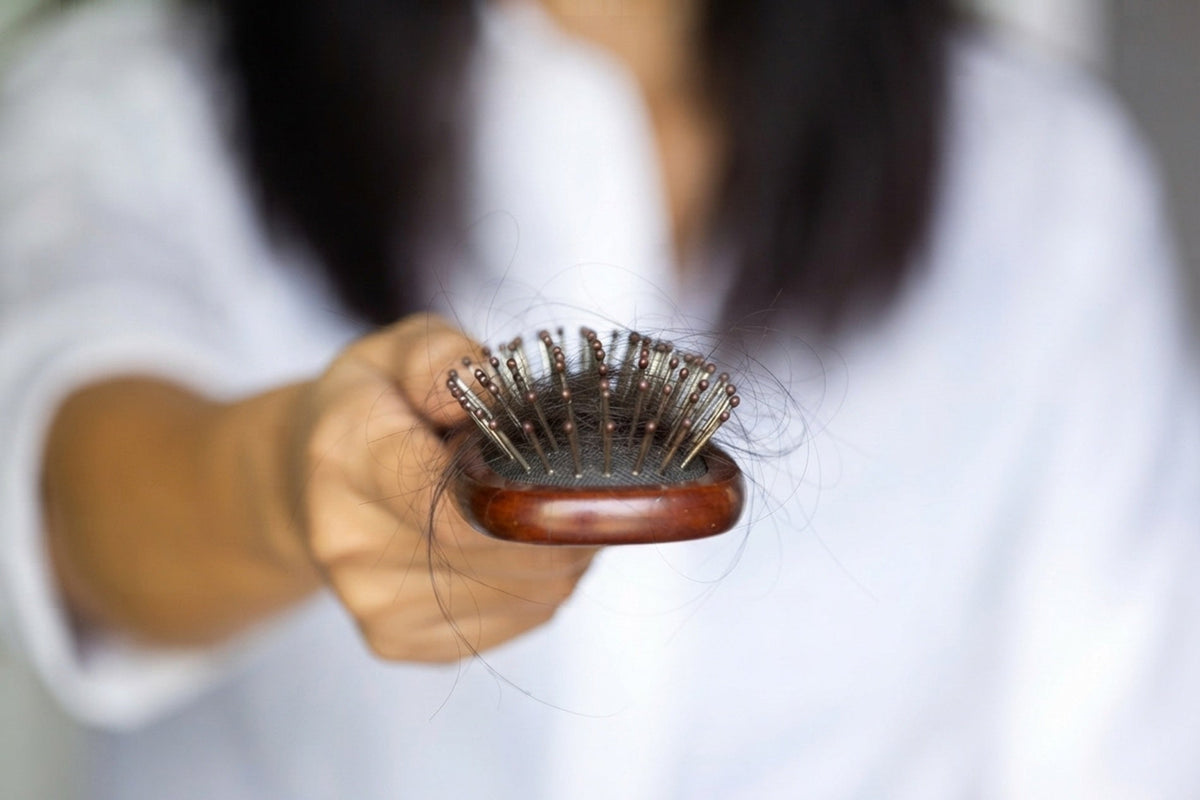
If you've noticed more hair in your brush, your shower drain, or your pillow as the weather cools, you're not imagining it, and you're not alone. Every autumn, dermatologists and trichologists see a measurable uptick in patients asking the same question: "Why am I suddenly losing so much hair?"
Fall shedding is a real, well-documented phenomenon, and understanding the science behind it is the first step toward managing your hair effectively.
In this article, we'll break down exactly why this happens, what's going on beneath your scalp, and how a targeted, science-backed routine, like the one built around Tricomin Clinical AHK-Cu science, can help your hair recover faster and grow back stronger.

Your Hair Follows a Seasonal Clock
It's easy to think of hair growth as a slow, steady, year-round process. In reality, every hair on your head is cycling independently through distinct phases, and the proportion of hairs in each phase shifts with the seasons.
There are three main phases of the hair growth cycle:
-
Anagen (growth phase): The active phase, during which a hair follicle is producing new hair. This phase can last anywhere from two to seven or more years, and roughly 90% of your hair is in this phase at any given time under normal conditions [1].
- Catagen (transition phase): A short, two-to-three-week phase during which the follicle shrinks and detaches from its blood supply, signaling the hair to stop growing.
-
Telogen (resting/shedding phase): A resting period lasting around two to three months, at the end of which the old hair is shed to make room for a new anagen hair to begin growing in its place.
Under typical circumstances, only about 10% of your scalp hair is in the telogen phase at once, which is why the average person sheds somewhere between 50 and 100 hairs a day without noticing much difference [1, 2]. But research on seasonal hair biology has found that this percentage isn't fixed. It fluctuates throughout the year based on the natural hair cycle and tends to peak in early-to-mid fall [1, 3].

The Science: Why Autumn Triggers a Shedding Surge
The leading explanation for fall shedding reflects changes in the hair-growth cycle and may overlap with the mechanisms involved in telogen shedding. It appears to be tied to changes that begin months earlier, in the height of summer.
Here's the leading hypothesis, though the underlying mechanism is still described in the research as probable rather than fully proven:
-
Longer daylight hours in spring and summer push more follicles into the anagen (growth) phase. Increased sunlight (UV) exposure is believed to stimulate follicle activity, which is part of why many people feel their hair is thicker and fuller in the summer months.
-
As those follicles complete their growth cycle, they shift into telogen (resting) phase roughly three to four months later, which lands squarely in September to November for most people in the Northern Hemisphere.
- Because a larger-than-usual percentage of follicles entered telogen around the same time, a larger-than-usual percentage exit telogen and shed around the same time, too [3]. The result: a noticeable, temporary increase in daily hair loss that can feel alarming even though it's a normal biological rhythm.
For most people, shedding naturally tapers off within a few weeks to a couple of months. But "normal" doesn't mean you have to just wait it out. The follicle environment during this shedding window matters: a scalp that's under-nourished, inflamed, or lacking the right cofactors for healthy keratin production is more likely to experience a rockier transition and slower regrowth.

Other Fall-Specific Stressors That Compound Shedding
Seasonal telogen effluvium doesn't happen in a vacuum. Autumn also brings a handful of secondary stressors that can pile onto the natural shedding cycle:
- Post-summer scalp damage. UV exposure, chlorine, saltwater, and heat over the summer months can leave the scalp barrier and hair shaft in a weakened state heading into fall.
- Shifts in humidity and temperature. Drier indoor air from heating systems can strip moisture from the scalp, contributing to a less hospitable environment for new growth.
- Back-to-school and back-to-work stress. Cortisol spikes from routine changes and increased stress load are a well-known trigger that can independently push additional follicles into the telogen phase.
- Nutrient dips. Diet changes going into fall and winter can sometimes reduce intake of the vitamins and minerals hair follicles rely on for the energy-intensive process of building new hair.
None of these factors cause fall hair shedding on their own, but they can make an already-vulnerable follicle cycle more pronounced, which is exactly why proactive scalp care in September and October tends to pay off.

What You Can Actually Do About It
Because hair shedding is driven by a hormonal and cyclical process, you can't simply "stop" it, but you can support your scalp and follicles so that regrowth is faster, fuller, and less disrupted. That support comes down to three things:
Tip 1: Keep the scalp clean and free of buildup so follicles aren't obstructed as new anagen hairs try to emerge.
Tip 2: Strengthen the hair shaft so existing strands are more resistant to breakage while the cycle runs its course.
Tip 3: Deliver the right nutritive compounds directly to the follicle, giving it what it needs to produce strong, healthy keratin during the regrowth phase.
This is where the science behind Tricomin Clinical comes in.
The Science Behind Tricomin: What Is AHK-Cu?
At the center of every Tricomin Clinical formula is a proprietary copper peptide complex called AHK-Cu (short for the tripeptide-copper complex, Alanine-Histidine-Lysin bound to copper).
In the context of hair, laboratory research found that AHK-Cu:
- Supported hair follicle growth: A specific low concentration of AHK-Cu significantly increased the length of isolated human hair follicles after 12 days.
- Stimulated dermal papilla cell proliferation: AHK-Cu increased the growth of cultured dermal papilla cells, which are involved in regulating hair follicle activity.
- Influenced cellular survival pathways: AHK-Cu increased Bcl-2 and decreased Bax expression in cultured dermal papilla cells, changes associated with cellular survival.
- Showed a concentration-dependent effect: Importantly, higher concentrations did not produce greater growth. In fact, the highest concentrations tested inhibited hair follicle elongation, highlighting that more is not necessarily better [4].
These findings provide laboratory evidence that AHK-Cu can influence biological processes associated with hair follicle growth and provides a scientific basis for continued investigation of AHK-Cu in hair and scalp care.
Tricomin Clinical's hair care formulas are built around this ingredient specifically because copper peptides address the follicle at a foundational level, rather than just addressing the visible symptoms of thinning hair.

Building a Fall Hair Care Routine with Tricomin Clinical
Given everything happening beneath the surface each autumn, now is the ideal season to be deliberate about your hair care routine: cleansing, strengthening, and treating in a way that works with your hair's natural cycle rather than against it. Here's how the Tricomin Clinical line is designed to do exactly that:
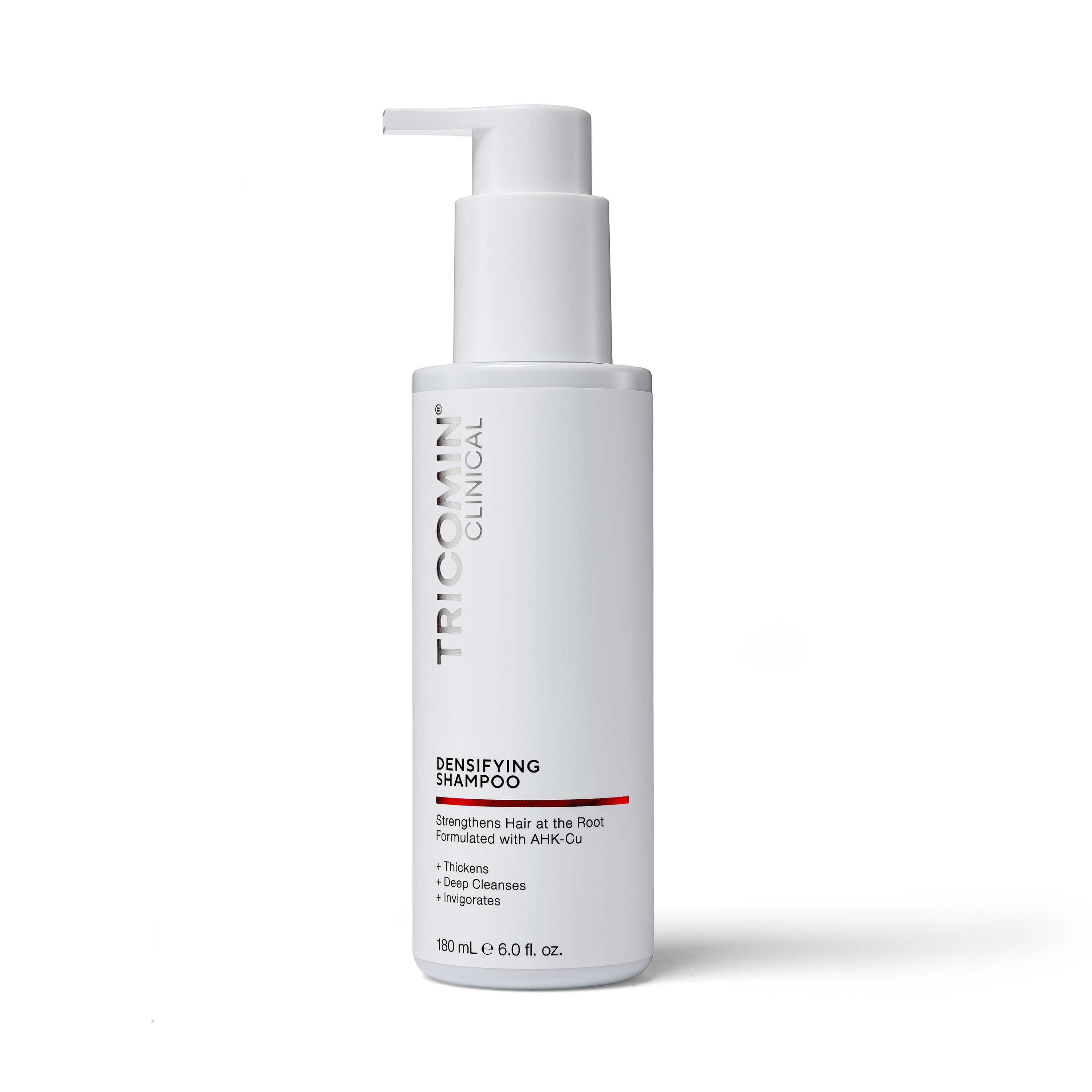
Step 1: Cleanse with Densifying Shampoo
A healthy shedding season starts with a clean, balanced scalp. Densifying Shampoo is formulated with AHK-Cu to gently cleanse away product buildup, excess oil, and environmental residue (hello, summer sunscreen and chlorine) without stripping the scalp barrier. A clear, well-nourished scalp gives new anagen hairs a better environment to emerge from as older telogen hairs shed away.

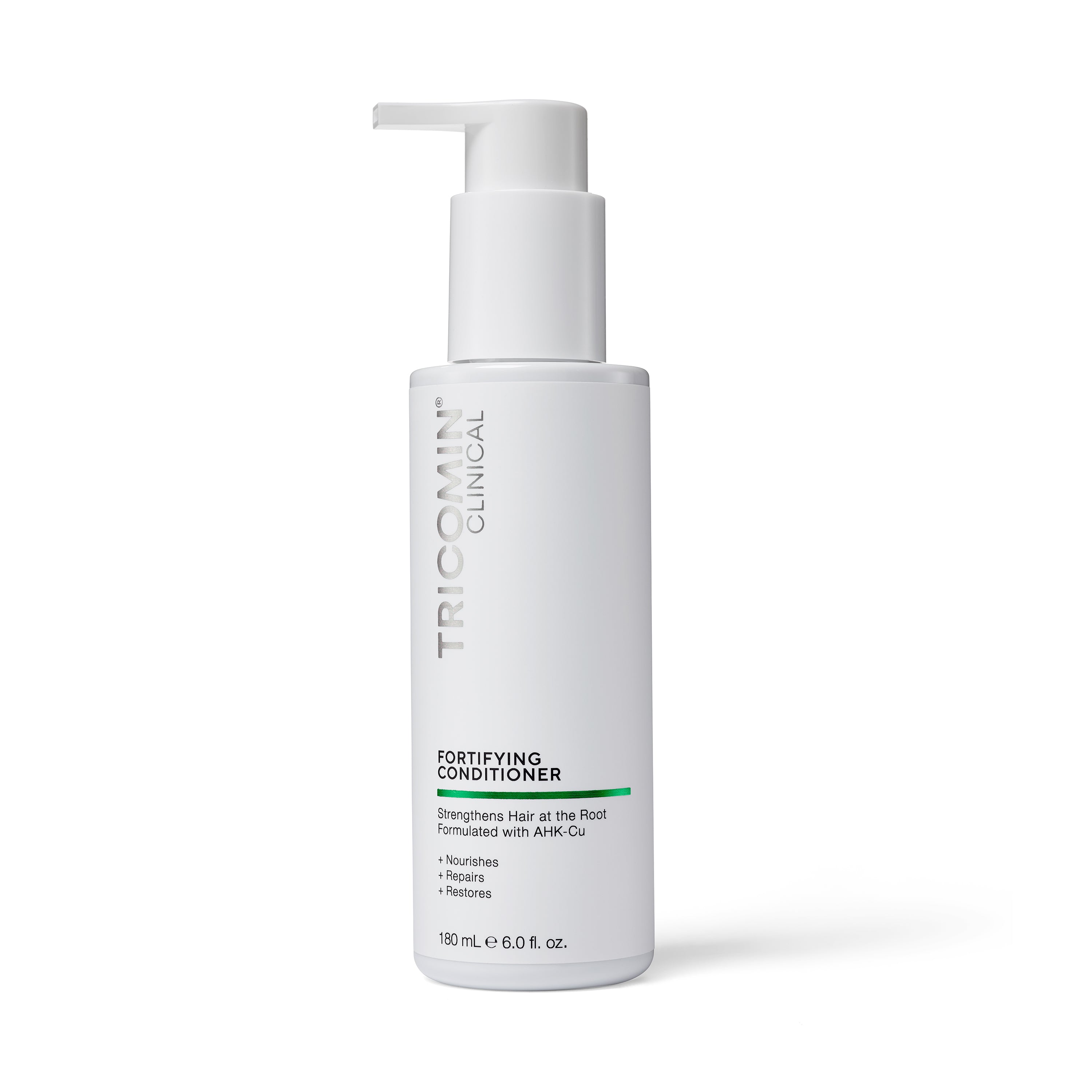
Step 2: Condition with Fortifying Conditioner
Shed hairs are often accompanied by strands that are more prone to breakage, especially after a summer of sun and heat exposure. Fortifying Conditioner is designed to detangle and reinforce the hair shaft, reducing mechanical breakage from brushing and styling so the hair you do have looks fuller and holds up better through the season.

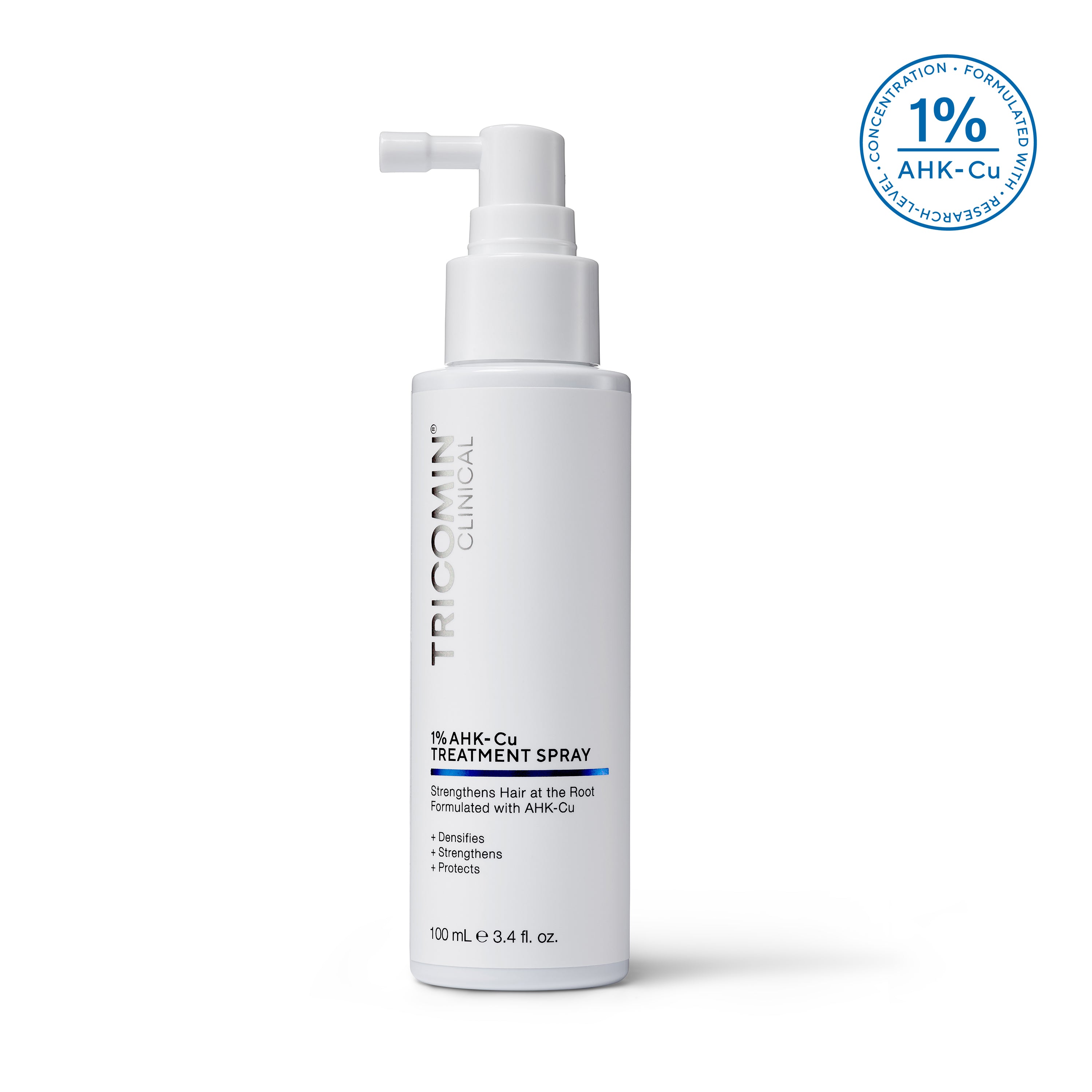
Step 3: Treat with 1% AHK-Cu Treatment Spray
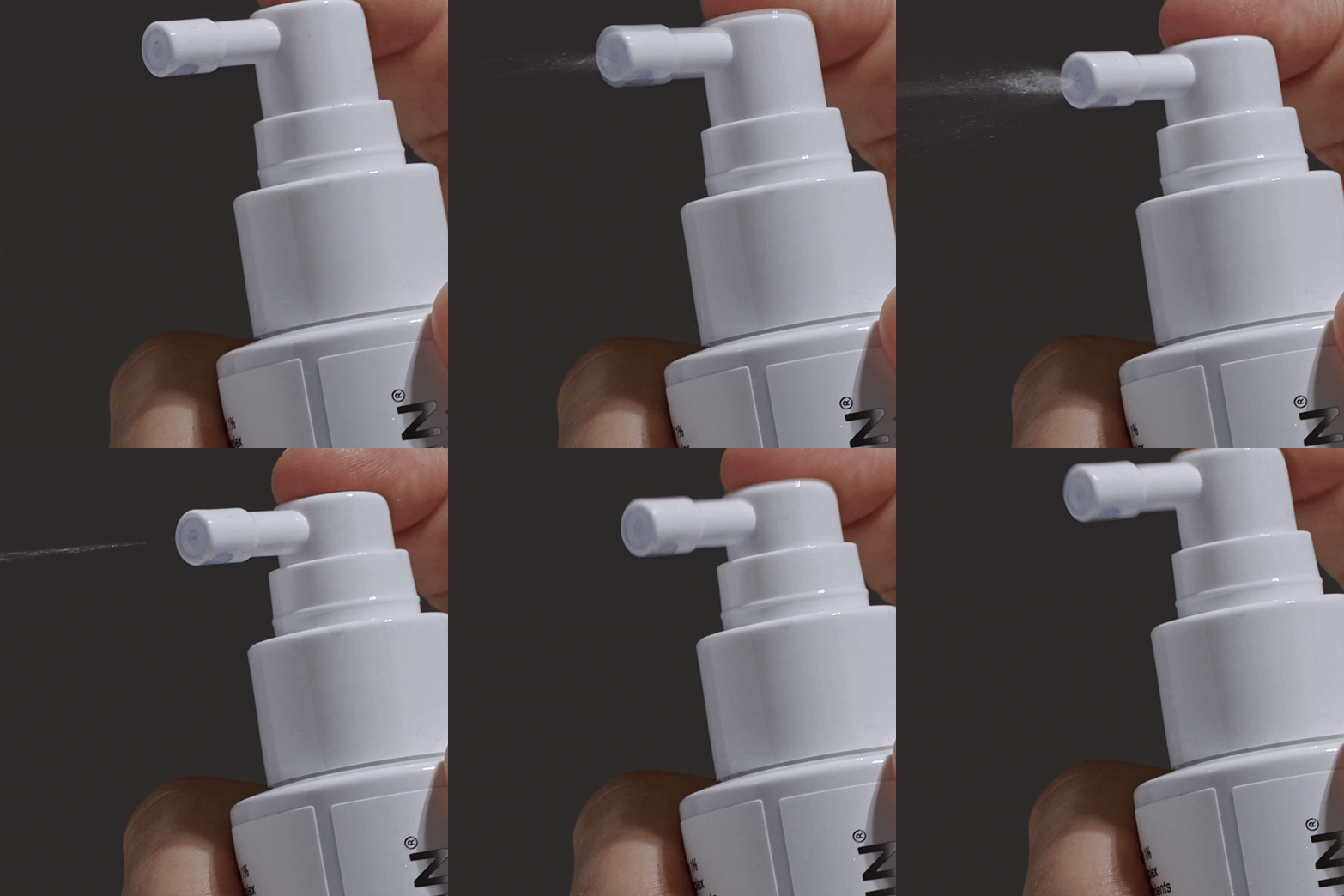
This is where the real work happens. The 1% AHK-Cu Treatment Spray is a leave-in, targeted treatment delivering a concentrated dose of copper peptides directly to the scalp and follicle. Applied consistently, it's designed to support the follicle through its active growth phase, which matters most in fall, when a large percentage of follicles are re-entering anagen after their telogen reset. A quick daily application (no rinsing required) makes it easy to stay consistent through the busy back-to-school, back-to-work season.

The Complete Routine: Hair Strengthening System
For anyone experiencing fall shedding, using all three products together produces the best results. The Hair Strengthening System bundles the Densifying Shampoo, Fortifying Conditioner, and 1% AHK-Cu Treatment Spray into one complete regimen: cleansing, strengthening, and treating in the sequence your scalp and follicles need to move through the seasonal cycle as smoothly as possible.

On the Go: Travel System Kit
Fall is also a busy travel season. Weekend trips, kids sports, holiday visits, and work travel can all make it easy to fall off a consistent routine right when consistency matters most. The Travel System Kit includes travel-sized versions (3.4 fl oz.) of all three Hair Strengthening System products, so there's no excuse to skip a step just because you're not at home.

How Long Does Fall Shedding Last?
For most people, seasonal hair shedding peaks over a few weeks and gradually resolves within two to three months as the hair cycle rebalances. If you're consistent with a scalp-supportive routine during this window, you're giving new anagen hairs the best possible conditions to come in strong.
That said, it's worth knowing the difference between normal seasonal shedding and something that warrants a conversation with a dermatologist:
- Normal seasonal shedding tends to be diffuse (spread evenly across the scalp), temporary, and gradually improves within a couple of months.
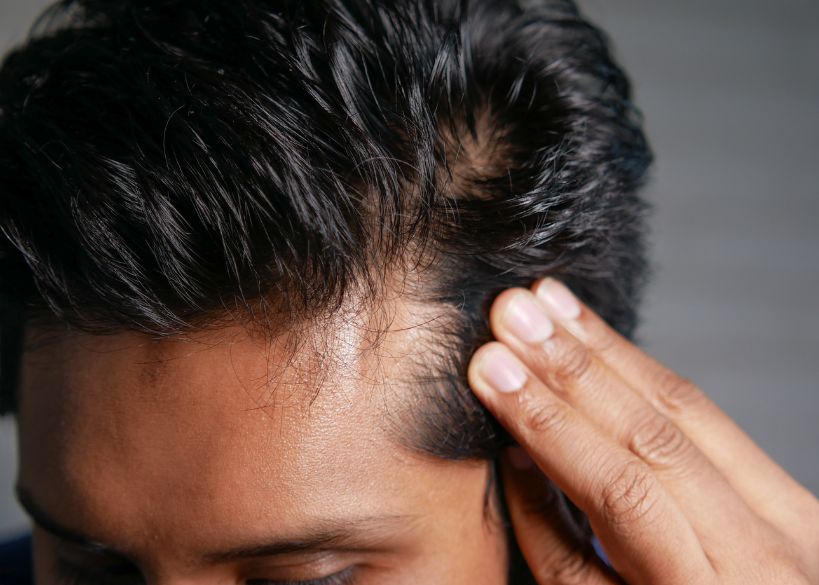
- Signs worth a professional evaluation include shedding that continues well beyond three months, noticeable thinning or bald patches in specific areas, scalp redness, itching, or pain, or shedding that started alongside a major illness, medication change, or significant life stressor.
Tricomin Clinical products are designed to support healthy hair and scalp function, but they are not a substitute for a dermatologist's evaluation if you're experiencing significant or prolonged hair loss.

Frequently Asked Questions about Fall Shedding Season
Can I use Tricomin Clinical every day during shedding season?
Yes. The Tricomin Clinical routine is designed for consistent use. Densifying Shampoo and Fortifying Conditioner support regular cleansing and conditioning, while the 1% AHK-Cu Treatment Spray is a leave-in treatment that can be applied daily without rinsing.
Is the 1% AHK-Cu Treatment Spray better than shampoo for hair shedding?
They serve different purposes. The shampoo cleanses and supports the scalp, while the 1% AHK-Cu Treatment Spray delivers a targeted copper peptide treatment to the scalp. For comprehensive support during shedding season, using the products together provides a complete routine.
Should I start using Tricomin Clinical before fall shedding begins?
Starting a consistent scalp and hair care routine before or at the beginning of seasonal shedding can help you stay ahead of your fall hair-care needs. Tricomin Clinical provides a three-step approach to cleansing, conditioning, and supporting the scalp and hair with AHK-Cu.

The Bottom Line
Fall hair shedding isn't a sign that something has gone wrong. It's a predictable, well-documented biological rhythm tied to the way your hair follicles synchronized their growth cycles back in the sunnier months.
That said, "predictable" doesn't mean you have to ride it out passively. Giving your scalp and follicles the right support during this transition, through gentle, effective cleansing, shaft-strengthening conditioning, and a clinically-informed treatment like AHK-Cu, can help you move through shedding season with hair that looks and feels fuller, faster.
Explore the full Tricomin Clinical range to build a routine that works with your hair's natural cycle this fall. Start with the Hair Strengthening System for the complete three-step regimen in one bundle.
Sources
[1] Kunz M, Seifert B, Trüeb RM. Seasonality of hair shedding in healthy women complaining of hair loss. Dermatology. 2009;219(2):105–110. doi:10.1159/000216832. PMID:19407435.
[2] Randall VA, Ebling FJG. Seasonal changes in human hair growth. British Journal of Dermatology. 1991;124(2):146–151. doi:10.1111/j.1365-2133.1991.tb00423.x.
[3] Orentreich N. Scalp hair replacement in man. In: Montagna W, Dobson RL, eds. Advances in Biology of Skin. Vol IX: Hair Growth. Oxford: Pergamon; 1969:99–108.
[4] Pyo HK, Yoo HG, Won CH, et al. The effect of tripeptide-copper complex on human hair growth in vitro. Archives of Pharmacal Research. 2007;30(7):834–839. doi:10.1007/BF02978833.
This article is intended for general educational purposes and is not a substitute for individualized medical advice. Consult a board-certified dermatologist for diagnosis or treatment of persistent or significant hair loss.